How I Cracked the Magic of Cappadocia’s Urban Maze
Have you ever wandered through a place that feels like another planet? Cappadocia’s unique urban landscape, carved into soft volcanic rock, blends nature and human ingenuity in ways that still baffle me. As someone who thought I’d seen it all, this Turkish gem rewired my understanding of space, design, and travel. In this piece, I’ll walk you through how to truly feel the city — not just see it — using simple but powerful techniques anyone can use. More than a destination, Cappadocia is an invitation to rethink what a city can be: one that grows not outward, but inward, upward, and deep beneath the earth.
First Impressions: Stepping Into a Dreamlike Cityscape
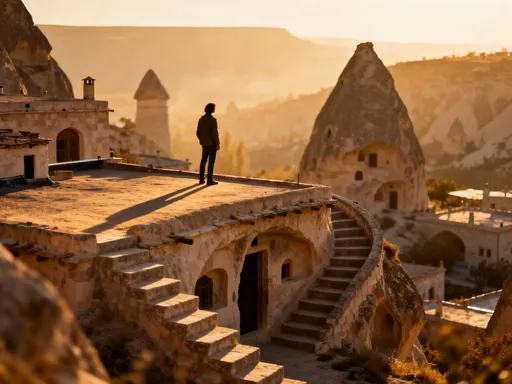
Arriving in Cappadocia is like stepping into a dream shaped by wind, time, and human hands. The terrain around Göreme and Uçhisar unfolds in surreal formations — tall, conical spires known as fairy chimneys rise like sentinels from the earth, their soft tuff stone sculpted by millennia of erosion. What strikes visitors immediately is the absence of conventional architecture. There are no glass towers or brick facades. Instead, homes, shops, and even boutique hotels are carved directly into the rock. This isn’t a reconstructed heritage site; it’s a living urban fabric where ancient caves serve as modern residences, family-run restaurants, and artisan workshops.
The town of Göreme, a UNESCO World Heritage site, functions both as a historic landmark and a bustling community. Its narrow, winding alleys don’t follow a grid but twist organically, shaped by the contours of the land. What appears to be a dead-end might reveal a hidden staircase leading to a rooftop terrace with panoramic views of the Rose Valley. These pathways, worn smooth by generations of footsteps, guide movement not through signs or maps, but through instinct and subtle visual cues — a shift in rock color, a carved archway, or a faint echo from above. The city doesn’t announce itself — it reveals itself slowly, rewarding patience and curiosity.
One of the most disorienting yet enchanting aspects of Cappadocia is its three-dimensional layout. Unlike most cities built on a horizontal plane, Cappadocia expands vertically and subterraneously. A single building may have five levels: a ground-floor kitchen, a family living space two floors up, a storage cellar three levels down, and a private chapel tucked behind a concealed passage. This layered design challenges our typical sense of urban navigation. There are no street numbers, few formal addresses, and signage is minimal. Yet locals move through this maze with ease, guided by memory, routine, and an intimate knowledge of the rock’s textures and temperatures.
For the visitor, the initial experience can be overwhelming. The lack of familiar urban markers — traffic lights, street signs, wide boulevards — creates a sense of stepping outside modernity. But this disorientation is part of the magic. It forces a shift in perception. You begin to notice details you’d otherwise overlook: the way morning light filters through a narrow canyon, illuminating frescoes in a centuries-old chapel; how cool air rises from an open cellar door on a hot afternoon; or how a simple stone bench outside a cave home becomes a social hub in the late afternoon. In Cappadocia, the city is not just seen — it is felt through the body, the skin, and the senses.
The Rhythm of Cave Living: How Locals Shape Urban Flow
Urban space is not defined solely by walls and roofs, but by the rhythms of daily life. In Cappadocia, the cave dwellings are not museum pieces — they are lived-in, adapted, and continuously reshaped by the people who call them home. The way residents interact with their environment reveals a deep harmony between human behavior and geological form. Morning in Göreme begins quietly, with steam rising from tea glasses served on stone patios. Families gather in open courtyards carved into the rock, where the coolness of the stone provides natural insulation against the rising sun.
Temperature regulation is one of the most remarkable aspects of cave living. The thick volcanic tuff acts as a natural insulator, keeping interiors cool in summer and warm in winter. Many homes require no artificial heating or cooling, a sustainable advantage that modern architecture is only beginning to emulate. Ventilation is achieved through a network of small shafts and strategically placed windows that allow air to circulate without compromising thermal stability. These design choices are not recent innovations — they are the result of centuries of refinement, passed down through generations.
Social patterns in Cappadocia also reflect the unique spatial logic of the region. Shared courtyards function as communal spaces where neighbors exchange news, children play, and elders rest in the shade. Because many homes are interconnected through tunnels or adjacent terraces, community life flows seamlessly across private and public boundaries. A simple errand to borrow sugar might involve descending a few steps into a neighbor’s lower-level kitchen, then climbing up through an interior passage. These micro-movements create a fluid, interconnected social fabric that is both intimate and resilient.
Observing daily rituals offers insight into how urban flow is shaped by culture. The afternoon tea ritual, for instance, often takes place on rooftop terraces, where families gather as the sun dips behind the valley. These elevated spaces, accessible only by narrow staircases or ladders, become extensions of the home — outdoor living rooms suspended above the rock. Even the way goods are delivered reflects the terrain: vendors navigate steep paths with small carts, while postal services rely on local knowledge rather than formal addresses. In Cappadocia, the city doesn’t dictate life — it dances with it, adjusting to the needs and rhythms of its people.
Navigating the Vertical Village: Up, Down, and Through
Cappadocia defies the flat, two-dimensional logic of most cities. To experience it fully, travelers must embrace verticality — moving up, down, and through layers of rock and space. Many visitors stick to ground-level paths, missing the richness of multi-level exploration. But the true character of the region reveals itself when you begin to read the city in three dimensions. Staircases appear unexpectedly — some carved directly into the rock, others built from stone blocks — leading to hidden upper floors of guesthouses, private homes, or abandoned chapels.
One effective technique for navigating this vertical village is learning to read elevation clues. Changes in floor level are often subtle. A slight step up might lead to a sleeping chamber; a drop of a few feet could open into a storage cellar or wine cistern. Light and shadow serve as natural guides. Early in the morning, sunlight slants into upper windows, illuminating rooms that remain dark at midday. Conversely, lower levels stay cool and dim, revealing themselves only when approached from the right angle. A small flashlight can be invaluable for peering into recessed doorways or checking the depth of a descending passage.
Safety is essential when exploring multi-level clusters. Some structures are fragile, especially in areas affected by weathering or seismic activity. It’s important to stay on marked paths and avoid entering restricted or unstable areas. However, many family-run guesthouses welcome guests to explore upper terraces or lower storage rooms, offering a firsthand experience of vertical living. In one such home in Üçhisar, a host demonstrated how the family uses different levels for different seasons — the upper floors for summer nights, the deeper chambers for winter warmth.
The vertical logic extends beyond individual homes. Entire neighborhoods are stacked like layers of a cake. In the town of Çavuşin, for example, the old village clings to a steep cliff, with homes perched precariously above one another. A single path winds upward, connecting homes that are separated by as much as ten meters in elevation. From a distance, they appear side by side; in reality, one family’s roof is another’s front yard. This stacking maximizes space in a terrain where flat land is scarce, demonstrating a centuries-old solution to urban density that remains relevant today.
Rooftop Culture: The Hidden Social Layer Above the Rocks
One of Cappadocia’s best-kept secrets is its rooftop culture — a network of elevated spaces that form an invisible social layer above the town. While most visitors focus on the ground-level caves and valleys, the rooftops offer a different perspective, both literally and socially. Many cave homes are connected by shared upper terraces or narrow walkways, creating a sky-level network that locals use for relaxation, conversation, and sunset viewing. These spaces are rarely marked on maps, but they are an integral part of daily life.
Gaining access to rooftops requires respect and permission. In family-run accommodations, hosts often invite guests to join them for evening tea on the terrace. These moments offer more than a view — they provide a window into local hospitality and community life. Sitting on a stone bench as the sun sets over the Pigeon Valley, painting the rock faces in hues of rose and gold, becomes a meditative experience. The sounds of the town — distant laughter, the clink of dishes, the call to prayer from a nearby village — drift upward, blending with the rustle of wind through the canyon.
Rooftops also serve practical purposes. They are used for drying herbs, storing firewood, or hanging laundry — everyday activities elevated above the foot traffic below. In summer, families move their living spaces outdoors, placing cushions and low tables on the cool stone. These terraces become open-air living rooms, where stories are shared and meals are enjoyed under the stars. For travelers, participating in this rooftop culture — even briefly — fosters a deeper connection to the place and its people.
Photographers and early risers will find that rooftops offer unparalleled vantage points for capturing the landscape. The soft morning light, before the hot sun flattens the shadows, reveals the texture and depth of the rock formations. From above, the fairy chimneys appear like a forest of stone, their intricate layers exposed. But beyond photography, the rooftop experience is about presence — about being still, observing, and absorbing the quiet beauty of a city that lives not just on the ground, but in the air between the rocks.
Underground Cities: When Urban Space Goes Deep
Beneath the surface of Cappadocia lies one of the most astonishing feats of ancient urban engineering: the underground cities of Derinkuyu and Kaymaklı. These vast subterranean complexes extend dozens of meters below ground, with some reaching as deep as eight levels. Built over centuries, they were designed to house thousands of people, along with livestock, food stores, and religious spaces, during times of conflict or harsh weather. While modern visitors often experience them as tourist sites, their true significance lies in their sophisticated spatial design and survival logic.
Walking through Derinkuyu is like entering a buried metropolis. Narrow corridors connect large chambers used for communal gatherings, while smaller rooms served as sleeping quarters or storage. Ventilation shafts, some over 50 meters deep, provided fresh air and allowed smoke from oil lamps to escape. These shafts also functioned as early warning systems — if enemies tried to block them, defenders could detect the change in airflow. Rolling stone doors, weighing several tons, could be closed from the inside to seal off entire levels, creating a secure, self-contained environment.
The urban intelligence behind these cities is staggering. Livestock pens were located on lower levels to contain odor and heat, while chapels with carved altars and frescoes were placed in quieter, more protected areas. Water was collected in deep cisterns and distributed through channels, ensuring long-term sustainability. Some complexes even included schools and wine presses, indicating a full range of social and economic activities. These were not temporary shelters but fully functional underground communities.
To appreciate these sites beyond the tourist checklist, it helps to think like an urban planner. Notice how corridors slope slightly to allow drainage, how ceiling heights vary to conserve heat, and how sound travels through the tunnels. Imagine the daily rhythms — children playing in wide chambers, artisans working in dimly lit workshops, priests conducting services in rock-hewn chapels. The underground cities remind us that urban space is not limited to the surface. They represent a profound adaptation to environment, a testament to human ingenuity in the face of scarcity and danger.
Smart Exploration: Tools and Tactics for Feeling the Space
To truly absorb Cappadocia’s urban rhythm, standard sightseeing — ticking off landmarks and snapping photos — is not enough. A deeper experience requires mindfulness, intention, and a few simple tools. The goal is not to see more, but to feel more. One of the most effective techniques is slow walking. Instead of rushing from cave church to fairy chimney, choose a single neighborhood and explore it slowly, paying attention to textures, temperatures, and sounds. Let your body register the coolness of a stone wall, the echo in a tunnel, or the way light shifts at different times of day.
Journaling can enhance spatial awareness. Carry a small notebook and record your sensory impressions: How does a particular cave smell? What emotions arise when you enter a narrow passage? Is there a sense of safety, mystery, or confinement? These reflections help you connect emotionally with the space, transforming it from a backdrop into a living presence. Sketching, even crudely, can also deepen observation — the act of drawing forces you to notice details you might otherwise overlook.
A small flashlight is a surprisingly useful tool. Many caves and tunnels have dimly lit corners where frescoes or carvings are barely visible. A gentle beam can reveal ancient symbols, tool marks, or layers of paint without disturbing the atmosphere. But use it respectfully — avoid shining it in others’ eyes or damaging fragile surfaces. Similarly, wear sturdy, non-slip shoes. The terrain is uneven, and some paths are steep or loose with gravel.
Timing matters. Visiting popular sites early in the morning or late in the afternoon reduces crowds and enhances the experience. At sunrise, the Rose Valley glows with soft pink light, and the air is still. At dusk, the town quiets down, and the rooftop terraces come alive with families and travelers alike. Avoid midday if possible — the sun is intense, and the caves offer little shade. Finally, engage with locals when invited. A shared cup of tea, a brief conversation, or a smile can open doors — sometimes literally — to experiences that no guidebook can offer.
Why This Matters: Reimagining Travel Through Urban Design
Cappadocia is more than a destination — it is a lesson in human adaptability, resilience, and creativity. By experiencing how space is shaped by geology, history, and daily life, travelers gain a new lens for exploring any city. The region challenges our assumptions about urban living, showing that homes don’t need to be built from scratch — they can be carved from the earth. That communities can thrive not just on the surface, but deep beneath it. That design can emerge not from blueprints, but from centuries of lived experience.
This understanding transforms the way we travel. Instead of moving from landmark to landmark, we learn to inhabit places — to feel their rhythms, respect their logic, and appreciate their quiet details. Whether walking through a cave home in Göreme or standing atop a rooftop in Uçhisar, we are reminded that cities are not static objects, but living systems shaped by people and time. Cappadocia invites us to slow down, to look closely, and to listen — not just with our eyes, but with our entire being.
As you plan your next journey, consider approaching it with spatial curiosity. Ask not just what to see, but how a place feels. How do people move through it? How does light shape its mood? How does the ground beneath your feet tell a story? In doing so, you honor not only the destination, but the profound intelligence embedded in the way humans build, live, and belong. Cappadocia’s magic lies not in its otherworldly appearance, but in the quiet wisdom of its design — a reminder that the most meaningful travel is not about escape, but about connection.