You Won’t Believe What Happens When the Sea Meets Fire in Trincomalee
Have you ever seen a festival where the ocean seems to glow with sacred fire? I didn’t either—until I wandered into Trincomalee during its temple festival season. This coastal gem in Sri Lanka isn’t just about golden beaches and ancient ruins; it pulses with spiritual energy when celebrations take over. Locals chant, drums echo, and rituals unfold under moonlit skies. What I experienced wasn’t tourism—it was immersion. Let me take you through the rhythm, color, and soul of Trincomalee’s festival season.
The Pulse of Trincomalee: More Than a Beach Destination
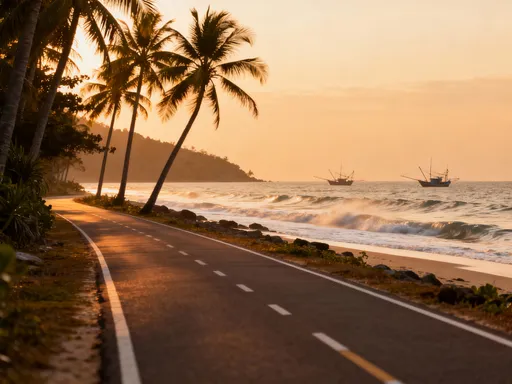
Trincomalee, nestled along the eastern coast of Sri Lanka, is often celebrated for its sweeping bays and postcard-perfect horizons. The city sits beside one of the world’s largest natural harbors, framed by rocky promontories and bathed in tropical sunlight. Its shores, such as Nilaveli and Uppuveli, draw visitors seeking serenity, snorkeling, and soft sands that stretch like silk into the Indian Ocean. But beyond its scenic beauty lies a cultural depth that only reveals itself when the rhythm of daily life gives way to the pulse of celebration.
For centuries, Trincomalee has been a spiritual stronghold for the Tamil Hindu community. The region’s identity is deeply interwoven with devotion, mythology, and seasonal cycles that honor the divine in both land and sea. While many travelers come for the sun and surf, those who time their visit with the temple festival season discover a different dimension—one where faith is not whispered in silence but proclaimed through music, movement, and flame. It is during these times that the city sheds its tourist-friendly exterior and reveals its beating heart.
The cultural fabric of Trincomalee is anchored in its religious traditions, particularly those centered around Lord Shiva. The Koneswaram Temple, perched dramatically on Swami Rock overlooking the ocean, is not only an architectural marvel but a living center of worship. Its origins trace back over two millennia, with historical references found in classical Tamil literature and ancient inscriptions. Pilgrims have long journeyed here, believing the site to be one of the five Paadal Petra Sthalams—sacred Shiva temples revered in Tamil hymns. This enduring legacy transforms Trincomalee from a mere coastal town into a destination of profound spiritual resonance.
When the festival season arrives, the city awakens with renewed purpose. Streets that were quiet just days before now hum with anticipation. Homes are cleaned, altars are adorned, and families prepare offerings of flowers, coconuts, and rice cakes. The air carries the scent of sandalwood and jasmine as temple bells begin their daily chorus. This transformation is not staged for visitors; it is organic, rooted in generations of tradition. To witness it is to understand that in Trincomalee, culture is not preserved in museums—it is lived, breathed, and celebrated with unwavering devotion.
When the Temple Comes Alive: Koneswaram Festival Unveiled
At the heart of Trincomalee’s spiritual calendar is the annual Koneswaram Temple festival, a ten-day celebration that draws thousands of devotees from across Sri Lanka and southern India. Typically held in August, though exact dates vary according to the Tamil lunar calendar, this festival honors Lord Shiva in his form as Konesar, the Lord of Kings. The event is not merely a religious observance but a grand expression of faith, community, and continuity. Each day unfolds with a sequence of rituals designed to purify, invoke, and ultimately celebrate the divine presence believed to reside within the temple sanctum.
The festival begins with the hoisting of the sacred temple flag, a moment rich in symbolism. As the bright yellow pennant rises above the gopuram (temple tower), it signals the opening of divine access—a spiritual gateway now open to all. From that point forward, the temple becomes a hive of activity. Priests in white dhotis move through predawn rituals, chanting Vedic mantras as they anoint the Shiva lingam with milk, honey, and sacred ash. The scent of burning camphor fills the inner chambers, mingling with the distant salt-kissed breeze from the sea below. Devotees line up before dawn, some barefoot, carrying offerings wrapped in banana leaves, their faces lit with quiet reverence.
Each morning and evening, a grand procession winds its way through the temple grounds and into the surrounding streets. Carried on the shoulders of strong devotees, the utsava murti (festival deity) is paraded in a richly decorated palanquin, its silver casing glinting under the tropical sun. Accompanied by the rhythmic beat of the parai drum, the shrill of the nadaswaram (a traditional wind instrument), and the synchronized chanting of “Om Namah Shivaya,” the procession moves like a river of devotion. Onlookers bow, children wave small flags, and elders offer flowers as the deity passes by. These processions are not performances—they are acts of collective worship, binding the community in shared purpose and belief.
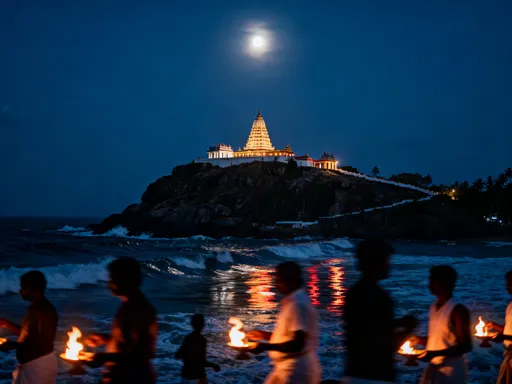
The climax of the festival arrives on the final day with the theertham—a holy bath ritual in the ocean. At dawn, the temple priests carry the deity down the steep steps of Swami Rock to the shoreline, where a ceremonial bath is performed in the crashing waves. This moment is considered especially powerful, as the union of fire (represented by the temple’s sacred flame) and water (the eternal ocean) is believed to purify all who witness it. Devotees wade into the surf, cupping seawater to pour over their heads, believing it to be transformed into sacred theertham. The sight of hundreds standing in the shallows, arms raised in prayer as the sun rises behind them, is nothing short of transcendent.
A Day in the Life of a Festival Wanderer
To experience the Koneswaram Festival fully, one must embrace the art of wandering—not with a schedule, but with openness. A perfect day begins before sunrise, when the city is still wrapped in a soft blue haze and the air carries the coolness of the night. Arriving at the temple grounds at 5 a.m., you’ll find the first wave of devotees already gathered, seated quietly on stone benches or kneeling in prayer. The morning puja (worship) is intimate, almost meditative, with priests moving through precise rituals while the sky gradually lightens over the bay. This is not a time for loud celebration, but for quiet communion.
As the sun climbs, so does the energy. By mid-morning, the outer courtyard buzzes with activity. Vendors set up stalls selling garlands of marigolds, coconuts wrapped in red cloth, and small clay lamps filled with ghee. The scent of fried lentil snacks and sweet jaggery rice cakes drifts through the air. Children dart between stalls, clutching paper fans shaped like peacocks, while elders sip from cups of spiced tea. Cultural performances often take place on a temporary stage near the temple entrance—classical Bharatanatyam dancers in vibrant silks, their movements telling ancient stories of gods and heroes, their ankle bells ringing in perfect time with the drum.
The afternoon brings a different kind of intensity. As temperatures rise, so does the spiritual fervor. One of the most moving moments is the arrival of pilgrims carrying kavadi—elaborate, often ornate structures balanced on the shoulders, sometimes adorned with peacock feathers and small pots of milk. For many, this act is a vow fulfilled, a physical offering made in gratitude or supplication. Some walk for miles, barefoot, their faces marked with sacred ash, their bodies swaying to the beat of drums. Watching a kavadi procession is to witness devotion in its most visceral form—a blend of sacrifice, discipline, and joy that defies easy explanation.
As dusk falls, the temple transforms once more. Oil lamps are lit along every pathway, casting a golden glow on the stone carvings and towering gopuram. The evening puja is louder, more communal, with hundreds joining in the chanting. If you linger past the official rituals, you might stumble upon an impromptu gathering in a nearby courtyard, where a local priest leads a group in song, or an elder shares stories of past festivals. These unplanned moments—a shared smile, a offered sweet, a spontaneous prayer sung in unison—are often the most memorable. They remind you that you’re not just observing a culture, but being welcomed into it.
Beyond the Main Event: Hidden Celebrations in Neighborhood Temples
While the Koneswaram Festival captures the spotlight, Trincomalee’s spiritual life extends far beyond its most famous temple. Scattered throughout the city and surrounding villages are smaller kovils (temples) that host their own festivals, often tied to local deities, ancestral traditions, or agricultural cycles. These gatherings may lack the grandeur of the main event, but they offer a more intimate, personal glimpse into the rhythms of daily faith. Visiting one of these neighborhood celebrations can feel like stepping into a private family gathering—one where you’re welcomed not as a tourist, but as a guest.
In the coastal village of Kanniya, just a short tuk-tuk ride from central Trincomalee, a small temple dedicated to the goddess Mariamman holds an annual festival celebrating protection from disease and drought. The altar is simple, lit by rows of clay lamps, and the offerings are humble—coconuts, turmeric, and handmade flower garlands. Yet the devotion is no less intense. Women in bright saris dance in a circle, their hands raised in prayer, while a local priest chants from ancient palm-leaf manuscripts. Children sit cross-legged on mats, listening to stories of the goddess’s miracles, their eyes wide with wonder.
Another example can be found in the farming community of Thampalakamam, where families observe a harvest festival in honor of Lord Murugan. Here, the celebration is deeply tied to the land. After a procession through the paddy fields, a ceremonial offering of the first rice is made at the temple, accompanied by traditional drumming and folk songs. Families gather for a communal meal, sharing vegetarian dishes prepared in large clay pots. As an outsider, you might be invited to join—offered a plate of rice, sambar, and banana, served on a banana leaf. This simple act of sharing food, known as prasadham, is more than hospitality; it is a gesture of spiritual inclusion.
What makes these smaller festivals so powerful is their authenticity. There are no stage lights, no ticketed entries, no souvenir stalls. The rituals follow age-old patterns passed down through generations, unchanged by tourism or modernization. You may not understand every word of the chants, but you feel their sincerity. You may not know the names of the deities, but you recognize the universal language of gratitude, hope, and community. In these quiet moments, far from the crowds and cameras, Trincomalee reveals its deepest truth: that faith is not always loud, but it is always present.
How to Experience the Festivals Respectfully and Meaningfully
Participating in Trincomalee’s temple festivals is a privilege, not a right. These are sacred events, rooted in centuries of tradition, and visitors are expected to observe certain customs as a sign of respect. The first and most visible is dress. Modest clothing is essential—shoulders and knees must be covered for both men and women. Many visitors choose to wear traditional attire, such as a cotton saree or a simple kurta, not only to blend in but to show reverence. Footwear must be removed before entering any temple compound, so wearing sandals that are easy to slip off is practical and considerate.
Behavior within the temple grounds should reflect the solemnity of the occasion. Loud talking, laughter, or intrusive photography are strongly discouraged. While it is generally acceptable to take photos from a distance, especially during processions, it is crucial to ask for permission before photographing individuals, particularly priests or those in deep prayer. Some temples have signs indicating no photography zones—these rules should be followed without question. Equally important is to avoid touching ritual objects, stepping on prayer mats, or walking in front of someone who is meditating or making an offering.
One of the most meaningful ways to connect is through simple gestures of cultural courtesy. Learning a few basic Tamil phrases, such as “Vanakkam” (hello), “Nandri” (thank you), or “Ellorukkum Vanakkam” (greetings to all), can open doors and warm hearts. Smiles are universal, but words show effort. Visiting during public darshan (viewing of the deity) hours, rather than private rituals, ensures you are not disrupting sacred ceremonies. If you are invited to join in an offering or receive prasadham, accept it with both hands as a sign of gratitude.
Supporting the local economy is another way to participate meaningfully. Instead of buying souvenirs from chain stores, consider purchasing flowers, coconuts, or oil lamps from vendors outside the temple to offer at the altar. Buying snacks like murukku or banana chips from neighborhood stalls not only supports small businesses but also deepens your connection to the community. Above all, approach the experience with humility and curiosity. You are not there to document a spectacle, but to witness a way of life that has endured through time.
Getting There, Staying Close: A Traveler’s Practical Guide
Reaching Trincomalee requires some planning, but the journey is part of the adventure. The most scenic route is by train from Colombo, which takes approximately eight to ten hours and offers breathtaking views of Sri Lanka’s eastern coastline. The rhythmic sway of the carriage, the sight of fishing boats dotting the horizon, and the sudden appearance of coconut groves along the shore all prepare you for the pace of life that awaits. Alternatively, long-distance buses operate regularly from major cities, offering a more economical option. For those short on time, domestic flights from Colombo to China Bay Airport take about an hour, though connections may require a layover.
When it comes to accommodation, Trincomalee offers a range of options to suit different preferences. For those seeking tranquility, the nearby beaches of Nilaveli and Uppuveli are ideal. These areas are home to eco-friendly guesthouses, family-run bungalows, and small resorts that blend into the natural landscape. Staying here provides easy access to both the sea and the festival sites, with tuk-tuks readily available for short trips into town. For a more central location, guesthouses in Trincomalee city offer proximity to the Koneswaram Temple and local markets, though they may be noisier during peak festival days.
Booking accommodations well in advance is strongly advised, especially during festival season. The influx of pilgrims and visitors means that rooms fill up quickly, and last-minute options may be limited or overpriced. It’s also wise to confirm whether your chosen lodging offers early breakfasts, as temple rituals often begin before sunrise. Staying hydrated is essential in Trincomalee’s humid climate—carry a reusable water bottle and drink regularly, especially if spending long hours outdoors. Sun protection, lightweight clothing, and comfortable walking sandals are must-haves.
Transportation within the city is straightforward. Tuk-tuks are the most convenient way to get around, and most drivers are familiar with temple routes. Negotiate the fare before starting your journey to avoid misunderstandings. For those who prefer independence, bicycle rentals are available in Nilaveli and offer a peaceful way to explore the coastline. Finally, since festival dates follow the lunar calendar, it’s essential to check local sources or consult with tourism offices for exact schedules. Arriving a day or two before the main events begin allows you to settle in, acclimate, and absorb the growing excitement that precedes the celebrations.
Why Festival Travel Changes How You See a Place
Traveling to see a destination during its festival season is not the same as visiting a museum or standing before a famous monument. It is an invitation to step inside the living story of a place. In Trincomalee, the sea does not merely meet the shore—it meets fire, devotion, and centuries of memory. When you witness a priest chant over sacred waters, or walk behind a kavadi bearer lost in prayer, you are no longer an observer. You are part of a continuum—a thread woven into the fabric of a culture that has honored the divine in nature for generations.
Festivals have the power to transform landscapes into living narratives. A rocky headland becomes Swami Rock, the abode of Shiva. A stretch of beach becomes a sacred site for purification. A simple drumbeat becomes a call to unity. These moments shift your perception from seeing a place as a collection of sights to understanding it as a community with values, rhythms, and dreams. This kind of travel fosters empathy, deepens curiosity, and leaves impressions that last far longer than any photograph.
More than anything, festival travel reminds us that the world is not static. It breathes, celebrates, mourns, and renews. In Trincomalee, the meeting of sea and fire is not just a spectacle—it is a symbol of balance, of the eternal dance between elements, between human and divine. To witness it is to be changed. So when you plan your next journey, don’t just ask where to go. Ask when to go. Seek the moments when a place comes alive, not for show, but for soul. Because sometimes, the most unforgettable experiences aren’t found on maps—they are felt in the heart, long after the flames have faded and the waves have carried the echoes away.