You Won’t Believe What I Found Shopping at Avignon’s Cultural Festivals
Stepping into Avignon is like walking through a living museum where every cobblestone tells a story. During its vibrant cultural festivals, the city transforms into a sensory playground—especially for shoppers who crave authenticity. From handcrafted Provençal textiles to artisanal soaps infused with lavender, I discovered that shopping here isn’t just about buying; it’s about connecting with centuries-old traditions in the most unexpected ways. The air hums with creativity, and every market stall, pop-up boutique, and open-air performance invites you to slow down and truly experience the soul of southern France. This is not retail therapy—it’s cultural immersion through the simple act of choosing what to bring home.
The Heartbeat of Avignon: Where Culture Meets Commerce
Avignon’s identity has always been shaped by its deep cultural roots. Once the seat of the Catholic papacy in the 14th century, the city carries a legacy of art, power, and religious significance that still echoes through its stone walls and winding streets. Today, that historical gravitas blends seamlessly with a thriving contemporary arts scene, making Avignon a rare blend of reverence and reinvention. This fusion is especially evident in the way commerce unfolds during cultural events. Unlike typical tourist cities where shopping feels transactional and impersonal, Avignon’s retail experiences are woven into the fabric of its heritage. Local artisans don’t just sell products—they share stories, techniques, and family legacies passed down through generations.
The city’s transformation during festival season reveals how culture and commerce support one another. When performers take over courtyards and ancient cloisters, artisans follow, setting up stalls in unexpected corners of the city. A former monastery courtyard becomes a marketplace for hand-printed linens; a quiet square fills with potters demonstrating centuries-old glazing techniques. These moments are not staged for tourists—they are organic extensions of Avignon’s creative spirit. Shoppers aren’t passive consumers but active participants in a living tradition. This authenticity is what sets Avignon apart from other European destinations where local craft has been diluted by mass production.
Moreover, the city’s designation as a UNESCO World Heritage site adds a layer of protection and pride to its cultural offerings. Residents take great care in preserving not only monuments like the Palais des Papes but also intangible traditions such as fabric dyeing, herbal soap-making, and regional cooking methods. When you purchase a lavender sachet from a small vendor near the Pont d’Avignon, you’re not just buying a souvenir—you’re supporting a practice that has survived wars, industrialization, and globalization. This connection between place, people, and product makes shopping in Avignon feel meaningful rather than superficial.
Festival Season: The Perfect Time to Shop with Soul
If there’s one time of year when Avignon pulses with unmatched energy, it’s festival season—particularly during the renowned Festival d'Avignon. Held every July, this month-long celebration transforms the city into an open-air theater where drama, dance, music, and visual arts converge. What many visitors don’t realize is that alongside the performances, a parallel world of artisan commerce blooms. Temporary markets spring up in repurposed spaces—abandoned chapels, walled gardens, and even sections of the city ramparts—offering goods that are often exclusive to the festival period.
These pop-up boutiques and craft fairs are curated with intention. Organizers prioritize local and regional makers, ensuring that everything sold reflects the authenticity of Provence. You won’t find plastic trinkets or imported knockoffs here. Instead, expect hand-thrown ceramics from villages like Saint-Rémy-de-Provence, natural perfumes made with locally harvested herbs, and limited-edition prints by artists inspired by the region’s light and landscape. Many artisans create special pieces just for the festival, knowing they’ll reach an audience that values craftsmanship over convenience.
One of the most enchanting aspects of shopping during the festival is the atmosphere. As twilight falls, the city glows with strings of lights, the scent of grilled vegetables and rosemary fills the air, and the sound of live jazz drifts from hidden courtyards. In this setting, browsing a stall of hand-bound notebooks feels less like shopping and more like discovery. Vendors often demonstrate their techniques—watching a printer transfer a floral pattern onto cotton using wooden blocks is as captivating as any stage performance. Children gather around to learn, elders reminisce about similar crafts from their youth, and visitors leave not only with a purchase but with a memory.
The timing also makes practical sense. With thousands of visitors in town for the arts, local businesses extend their hours, and special guided shopping tours are offered. These walks, led by cultural historians or longtime residents, take small groups to lesser-known markets and introduce them to artisans by name. It’s a level of access and intimacy that simply isn’t possible during the off-season. For travelers seeking depth over distraction, festival time offers the ideal balance of spectacle and substance.
Markets That Tell Stories: From Les Halles to Craft Stalls
No visit to Avignon is complete without a morning spent at Les Halles, the city’s central covered market. Open since the 19th century, this bustling hall is a feast for the senses. Under its iron-and-glass canopy, vendors display pyramids of sun-ripened tomatoes, wheels of goat cheese dusted with herbs, jars of golden honey, and baskets of black olives cured in thyme and garlic. But Les Halles is more than a place to buy food—it’s a living archive of Provençal culinary tradition. Each vendor represents a family farm, a local cooperative, or a small producer committed to sustainable practices.
The market’s rhythm follows the seasons. In spring, asparagus and strawberries dominate; by summer, peaches, figs, and melons take center stage. Even the olive oil changes throughout the year—early harvest oils are sharp and grassy, while late-season batches are smoother and richer. Shoppers learn to read these shifts, building relationships with vendors who remember their preferences and offer samples with a smile. This continuity fosters trust, a quality that’s increasingly rare in modern retail.
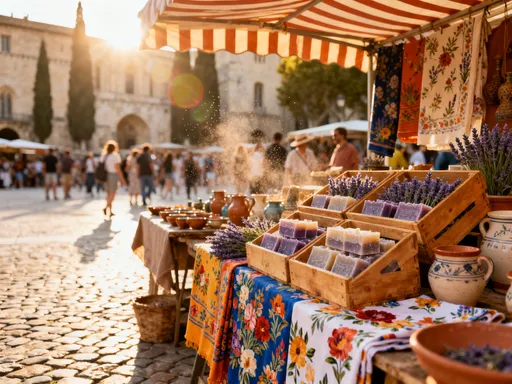
Outside the covered market, the Place Pie becomes a hub of artisan activity, especially during festivals. Ringed by cafés and shaded by plane trees, this open square hosts rotating craft markets where visitors can find everything from hand-painted tiles to embroidered tea towels. What makes these stalls special is the emphasis on provenance. A ceramicist from Apt might explain how her glazes use local minerals, or a soap maker from Forcalquier could describe the cold-process method that preserves the integrity of lavender essential oil. These conversations transform a simple purchase into a lesson in regional pride.
Unlike generic souvenir shops, these markets operate as community spaces. Locals meet here to exchange news, share recipes, and celebrate seasonal festivals. During Easter, stalls sell hand-decorated eggs and traditional cakes; at Christmas, nativity scenes crafted from olive wood appear alongside spiced wine vendors. For visitors, participating in these rhythms—even briefly—creates a sense of belonging. You’re not just observing culture; you’re stepping into its daily life.
What to Buy: Authentic Provençal Goods Worth Taking Home
For those wondering what to bring back from Avignon, the answer lies in the region’s most cherished crafts. First on any discerning shopper’s list should be Provençal indiennes—cotton fabrics printed with vibrant floral or geometric patterns. These textiles, originally inspired by Indian imports in the 17th century, became a symbol of southern French identity. Today, they’re still produced using traditional block-printing techniques by workshops in and around Avignon. A tablecloth, apron, or cushion cover made from genuine indiennes isn’t just decorative; it’s a piece of textile history.
Equally iconic are lavender-based products. The hills surrounding Avignon are dotted with lavender fields, and local artisans have perfected the art of turning this fragrant herb into soaps, balms, sachets, and even culinary syrups. The best lavender goods are made with essential oil distilled from flowers harvested at dawn, when their aroma is most potent. Look for labels indicating “Lavande vraie” (true lavender) and avoid synthetic fragrances. A small bar of olive oil and lavender soap, wrapped in simple paper, makes a humble yet deeply personal gift.
Olive oil is another must-purchase item. Provence produces some of France’s finest, with delicate, peppery notes that elevate even the simplest dishes. Seek out bottles labeled “AOP Huile d’Olive de Provence,” which guarantees origin and quality. Many producers offer tastings, allowing you to compare oils from different harvests and regions. Pair a good bottle with a wooden dipper or a hand-thrown ceramic dish, and you have a gift that speaks of place and care.
Don’t overlook ceramics from nearby villages like Moustiers-Sainte-Marie or Biot. These pieces—often glazed in cobalt blue or warm terracotta—are both functional and artistic. A salad bowl or pitcher from a local potter carries the weight of centuries-old techniques, from hand-throwing to wood-fired kilns. Similarly, hand-bound books from independent publishers in Avignon offer a tactile alternative to digital media. Whether it’s a journal covered in indienne fabric or a poetry collection printed on recycled paper, these books honor the slow, deliberate act of creation.
Beyond Souvenirs: Shopping as Cultural Immersion
What makes shopping in Avignon so transformative is the opportunity to go beyond observation and become a participant. Across the city, artisans offer workshops that invite visitors to try their hands at traditional crafts. Imagine spending an afternoon learning block printing from a third-generation textile artist, or shaping clay on a wheel under the guidance of a potter whose family has worked the same earth for generations. These experiences are not tourist gimmicks—they are genuine invitations to understand the skill, patience, and passion behind handmade goods.
Workshops in soap-making are particularly popular. Using natural ingredients like olive oil, shea butter, and lavender, participants mix, pour, and scent their own bars, learning about the chemical process of saponification along the way. The resulting soap may not be perfect, but it carries the imprint of personal effort. More importantly, it fosters appreciation for the artisans who do this work daily. When you later buy a professionally made soap, you’re not just purchasing a product—you’re honoring a craft.
These immersive experiences also support cultural preservation. Many traditional skills are at risk of disappearing as younger generations pursue urban careers. By participating in workshops and buying handmade goods, visitors help sustain demand for these crafts. Some artisans report that increased interest from international travelers has allowed them to hire apprentices or expand their studios. In this way, every purchase becomes a quiet act of conservation.
Moreover, engaging directly with makers builds human connections that transcend language and nationality. A shared laugh over a misprinted fabric pattern, a nod of approval from a potter as you shape your first bowl—these moments create lasting memories. They remind us that culture isn’t something to be consumed passively but lived, shared, and protected.
Smart Shopping Tips: Navigating Crowds, Prices, and Authenticity
While Avignon’s markets and festivals offer incredible experiences, they can also be overwhelming, especially during peak season. To make the most of your shopping journey, a few practical tips can go a long way. First, visit markets early in the morning—between 8:00 and 10:00 a.m.—when produce is freshest, crowds are thinner, and vendors are more relaxed. This is the best time to ask questions and strike up conversations.
When evaluating authenticity, look for signs of handmade craftsmanship: slight variations in color or pattern, visible brushstrokes, or imperfections that indicate human touch. Mass-produced items tend to be uniform and overly polished. Ask vendors about their process—those who make their goods will speak passionately about materials and methods. If a product is imported, reputable sellers will disclose this openly.
It’s also important to understand local customs. In Avignon, bargaining is generally not practiced, especially in established markets. Prices are fair and reflect the cost of quality materials and labor. Instead of negotiating, show appreciation by thanking the vendor, asking questions, or returning on a future visit. Many artisans remember loyal customers and may offer first access to new collections.
Payment preferences vary. While larger boutiques accept credit cards, smaller stalls often prefer cash, particularly for small purchases. Carry euros in smaller denominations to make transactions smoother. And don’t rush—shopping here is meant to be slow, deliberate, and enjoyable. Take your time to savor the colors, scents, and stories around you.
Why This Matters: Preserving Tradition One Purchase at a Time
In an age of fast fashion, disposable goods, and globalized supply chains, shopping in a place like Avignon feels quietly revolutionary. Each purchase made with intention supports not just an individual artisan but an entire ecosystem of tradition, sustainability, and community. When you choose a hand-printed tablecloth over a machine-made one, you’re voting for craftsmanship over convenience. When you buy olive oil from a local producer, you’re endorsing agricultural practices that protect the land.
More than that, mindful shopping fosters cultural respect. It acknowledges that traditions are not relics but living practices that require care and continuity. By participating in them—even in small ways—we help ensure they survive for future generations. This is the essence of ethical tourism: moving beyond sightseeing to meaningful engagement.
Avignon teaches us that shopping can be more than consumption. It can be curiosity, connection, and contribution. As you walk through its sun-dappled streets, market bag in hand, you’re not just collecting souvenirs—you’re gathering pieces of a story much larger than yourself. And in doing so, you become part of it.
So the next time you travel, consider what your purchases say about your values. Choose quality over quantity, origin over anonymity, and relationship over transaction. Let your journey be guided not by what’s easiest, but by what’s true. Because in places like Avignon, every choice carries the weight of history—and the promise of continuity.